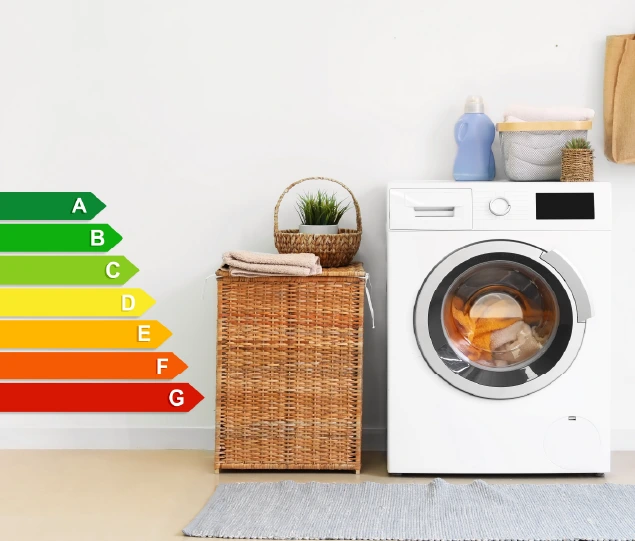

What makes up household electricity consumption?
To reduce electricity bills, you should first know what consumes electricity in the household – lighting, electric heating, the cooling system, ventilation, the water heater, circulation pumps, as well as large electrical appliances (fridge, washing machine, cooker and others) and small electrical appliances (computer, vacuum cleaner, blender, hairdryer and others).
The main factors affecting the consumption of electrical appliances are:
- Energy efficiency class – a higher class means lower consumption.
- Usage habits – how often and how the devices are used.
- The age of the device, its technical condition and its placement in the household – older or worn devices usually consume more electricity; devices placed incorrectly, for example a fridge next to a radiator or oven also consumes more electricity.
All household devices and the household members-users together make up household electricity consumption. Therefore, it is important that everyone uses electricity thoughtfully.



Check the household's total consumption
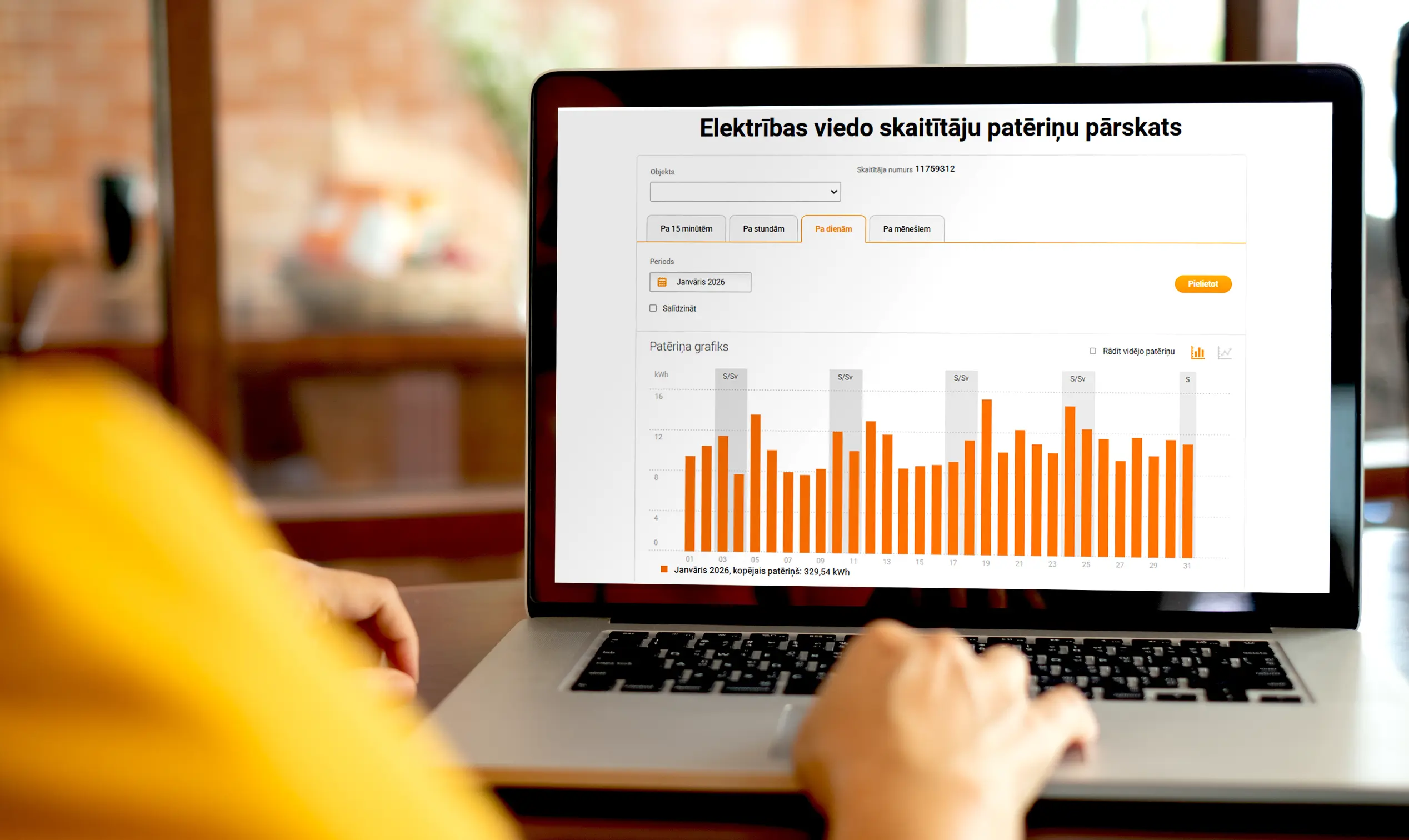
Start by analysing the household's total consumption by day and hour. This can be found in the customer profile on elektrum.lv, "Consumption overview" section, with consumption data available by month, day, hour and 15-minute intervals.
The data and daily habits can help you to determine which devices are consuming electricity at a particular moment – the easiest way to identify the large electrical appliances of the greatest share in the bill.
- Daytime hours: pay attention to the times when consumption increases, so you can understand which devices and daily habits contribute to the highest consumption.
- Night-time hours: when only continuously operating devices are running (fridge, freezer, water heater, circulation pump, etc.), you can check whether any of them is consuming more energy than necessary.
Such an analysis of total consumption will help you identify the highest consumption periods more precisely, assess daily habits and identify electrical appliances with higher consumption.
Analyse the consumption of specific electrical appliances
If the household's total electricity consumption seems higher – during the day or at night – it is recommended to check individual devices.
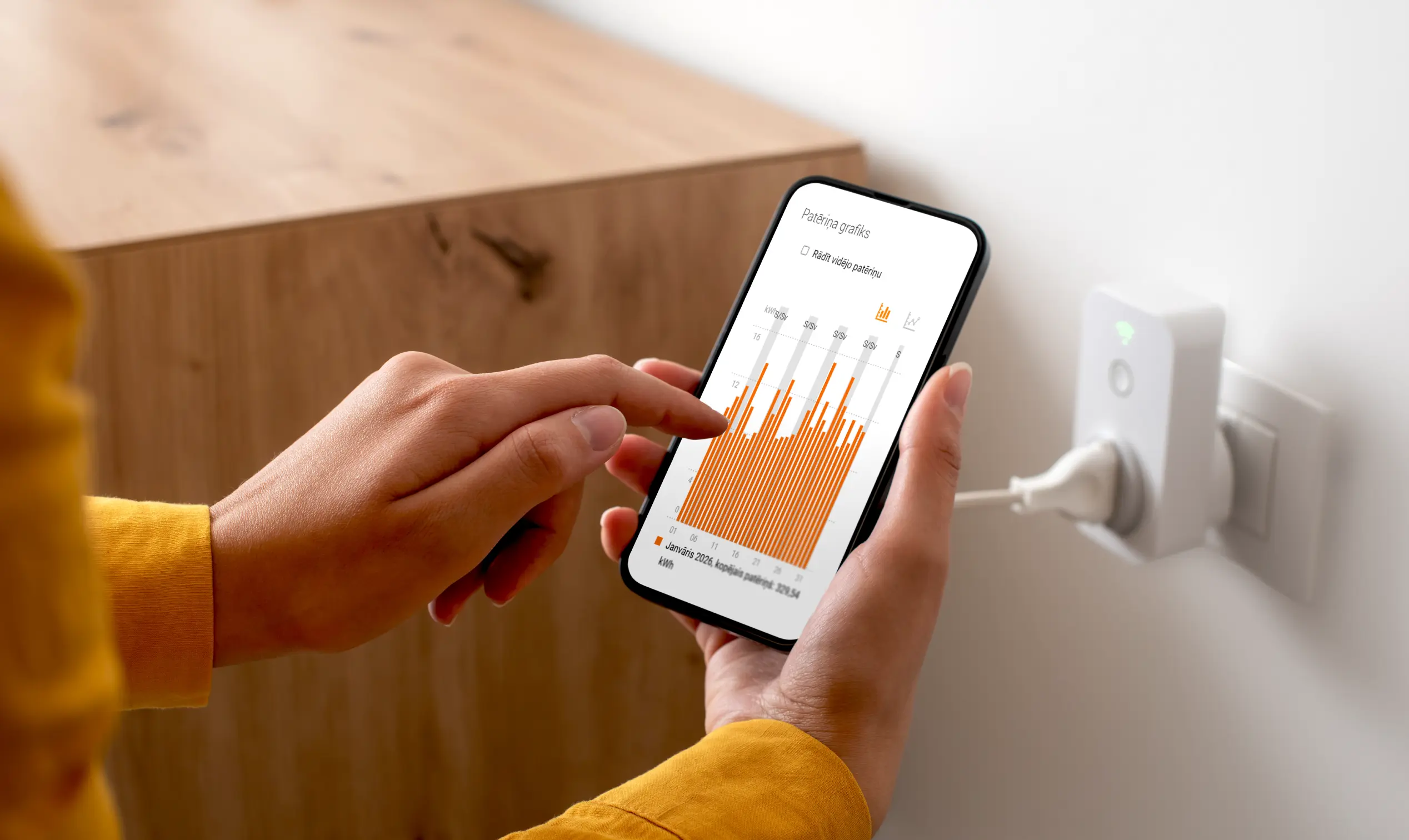
For this purpose, use more convenient power meter or smart plug, which shows actual consumption and records total consumption over a certain period. Particular attention should be paid to devices that operate for long periods, such as the fridge, freezer, water heater, heating equipment and devices in standby mode. To obtain an objective picture, it is recommended to monitor the device with a power meter for several hours or even for a full 24-hour period.
During the measurements, assess:
- which devices have the maximum electricity consumption,
- whether their consumption is significantly higher than it should be,
- how long they operate each day – only at certain periods or continuously.
The information obtained will help you understand the main sources of consumption and make informed decisions about further action – maintenance, repair or replacing devices with more energy-efficient solutions.
What should you change in your electricity usage habits?
Try these simple tips to use electrical appliances in more smart and efficient way.
Choose energy-efficient electrical appliances
Choosing energy-efficient electrical appliances help to reduce electricity consumption in the long term – they consume less electricity while increasing household comfort. First, pay attention to higher-consumption devices and, where possible, replace them with new, energy-efficient ones, while rarely used devices can be replaced gradually as needed.
Before purchasing a new electrical appliance read its energy label – a coloured label indicating the device’s energy efficiency class, that is, how efficiently the device consumes electricity, as well as other important parameters such as water consumption, noise level and capacity. The higher the energy efficiency class, the more efficient and better the performance of the electrical appliance.
- Since 2021, a new label has been introduced – a single scale from A to G, without plus signs, with a QR code allowing access to a European database containing the device’s technical data and visual icons showing the main parameters.
- The new energy label has been introduced for: luminaires and light bulbs, refrigerators and freezers, washing machines (with or without a dryer), tumble dryers, dishwashers, televisions, electronic displays, tablets and smartphones.
Energy-efficient devices, together with smart usage habits, make it possible to significantly reduce household electricity consumption without sacrificing convenience and comfort.